Data analysis can feel overwhelming when you're starting from scratch. There are dozens of tools, hundreds of courses, and everyone seems to have a different opinion about where to begin. But here's the truth: you don't need to learn everything at once.
Here are five practical steps to get started—without the overwhelm.
Step 1: Start With a Question, Not a Tool
Most beginners make the mistake of jumping straight into learning Python or SQL without understanding why. Instead, start with a real question you want to answer:
- "Which products sell best in Q4?"
- "How has patient wait time changed this year?"
- "What factors predict student dropout?"
When you have a question, the tool becomes a means to an end—not the end itself.
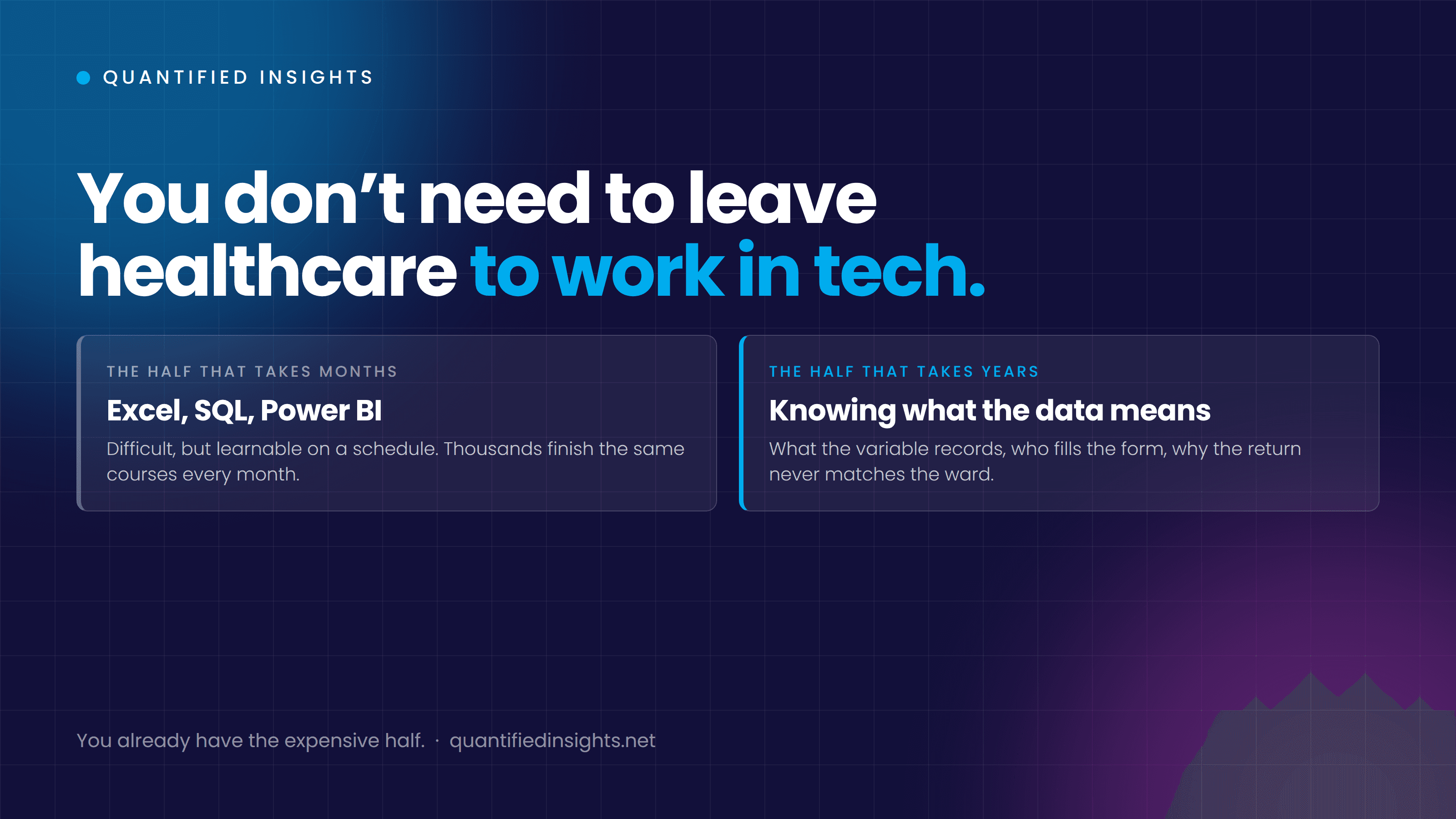
Step 2: Master Excel First
Yes, Excel. It's not glamorous, but it's the most widely used data tool in the world. Here's what to focus on:
- Sorting and filtering data
- Pivot tables for summarization
- VLOOKUP / INDEX-MATCH for combining data
- Basic charts for visualization
- Conditional formatting to spot patterns
Excel teaches you data thinking—how to structure, clean, and explore data—which transfers to every other tool.
Step 3: Learn SQL for Data Extraction
Once you're comfortable with Excel, SQL is the next logical step. Most organizational data lives in databases, and SQL is how you access it.
Start with:
- SELECT statements to pull data
- WHERE clauses to filter
- GROUP BY for aggregation
- JOIN to combine tables
You don't need to become a database administrator. Just learn enough to extract the data you need.
Step 4: Pick One Visualization Tool
Choose between Power BI or Tableau (we recommend starting with Power BI for its Excel integration). Learn to:
- Connect to data sources
- Build basic dashboards
- Create interactive filters
- Design clear, readable charts
A good dashboard tells a story. Focus on clarity over complexity.
Step 5: Work on a Real Project
The fastest way to solidify your skills is to work on something real. Options include:
- Analyze a public dataset from Kaggle or data.gov
- Offer to help a local business or NGO with their data
- Build a portfolio project around a question you're passionate about
The key is to produce something you can show—a dashboard, a report, or an insight.
You Don't Need to Be Perfect
Data analysis is a skill that improves with practice. Start small, stay consistent, and don't compare your beginning to someone else's middle. Every expert analyst once Googled "how to make a pivot table."
Ready to accelerate your journey? Our Data Analysis Training program covers all five steps—and more—with hands-on projects and expert guidance.