Healthcare is in the middle of a data revolution. From electronic health records to patient outcome tracking, the amount of data generated by hospitals and clinics has exploded. Yet most healthcare professionals were never trained to work with this data.
That's creating a massive skills gap—and a massive opportunity.
The Data Explosion in Healthcare
Consider what a single hospital generates daily:
- Patient admission and discharge records
- Lab results and diagnostic reports
- Medication orders and pharmacy data
- Billing and insurance claims
- Staff scheduling and resource utilization data
- Patient satisfaction surveys
This data holds insights that could improve patient care, reduce costs, and save lives—if someone knows how to analyze it.
Who Needs Data Skills in Healthcare?
The short answer: everyone. But specifically:
Hospital administrators need data to:
- Track bed utilization and patient flow
- Monitor key performance indicators
- Make evidence-based budget decisions
- Report to regulatory bodies
Health Information Managers (HIM) need to:
- Ensure data quality in health record systems
- Generate accurate reports for decision-making
- Support clinical coding accuracy
- Manage health data governance
Clinical staff benefit from:
- Understanding trends in patient outcomes
- Participating in quality improvement initiatives
- Contributing to research and evidence-based practice
- Making data-informed care decisions
Public health professionals need to:
- Track disease surveillance data
- Analyze epidemiological trends
- Evaluate intervention effectiveness
- Communicate findings to policymakers
What "Data Skills" Actually Means in Healthcare
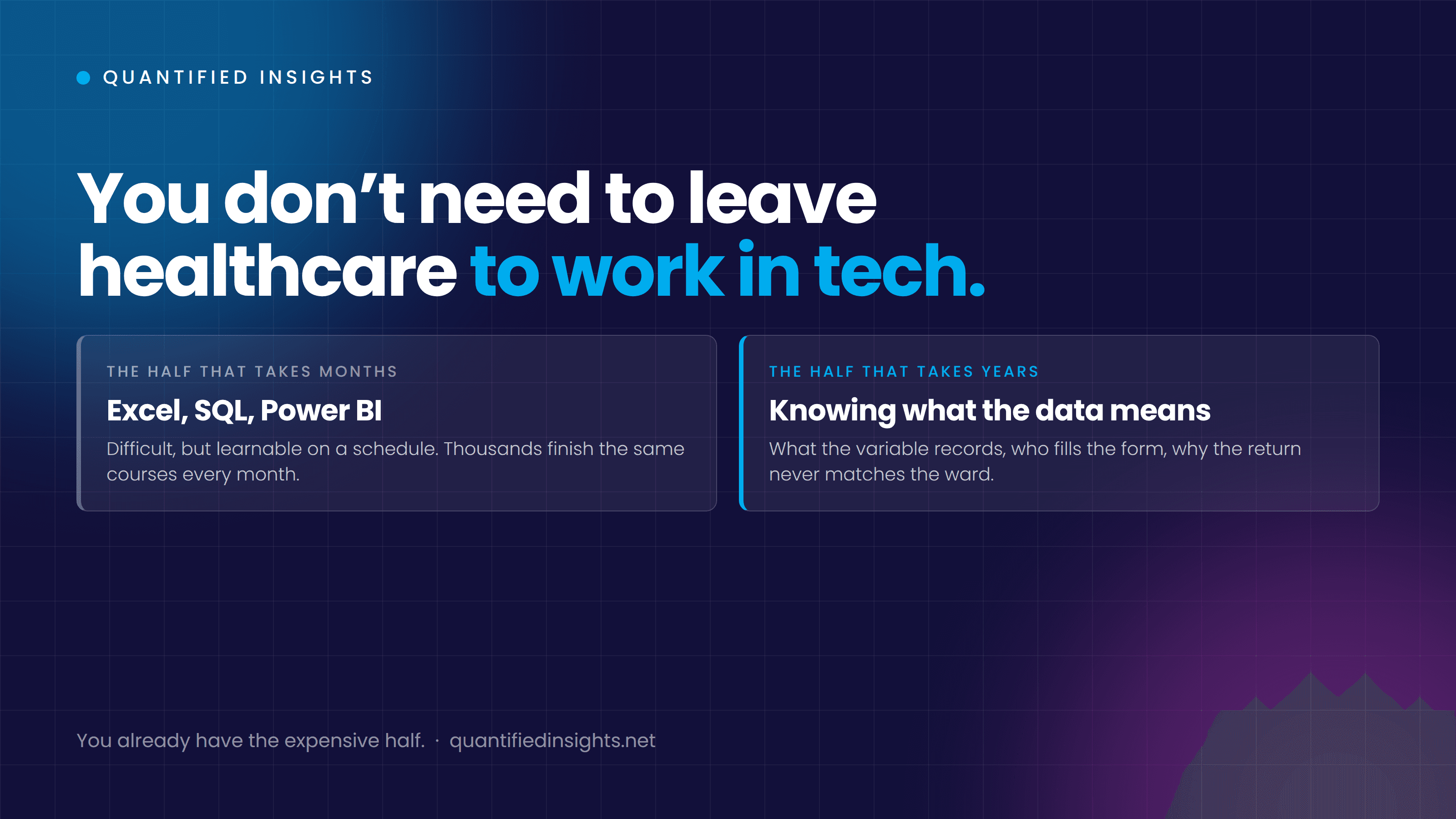
You don't need to become a data scientist. Healthcare data skills typically means:
- Data literacy: Understanding what data is available and what it means
- Excel proficiency: Cleaning, analyzing, and summarizing health data
- Dashboard skills: Building visual reports using Power BI or similar tools
- Statistical basics: Understanding common health metrics (rates, ratios, confidence intervals)
- Data governance: Knowing how to handle sensitive health data properly
The Career Impact
Healthcare professionals with data skills are increasingly in demand:
- Higher salaries: Data-skilled health professionals earn 20-35% more than peers
- Leadership opportunities: Data-informed managers advance faster
- Job security: As healthcare digitizes, data literacy becomes non-negotiable
- Impact: You'll directly contribute to better patient outcomes
Getting Started
If you work in healthcare and want to build data skills:
- Start with your own data—what reports does your department generate?
- Learn Excel for health data (it's different from business Excel in many ways)
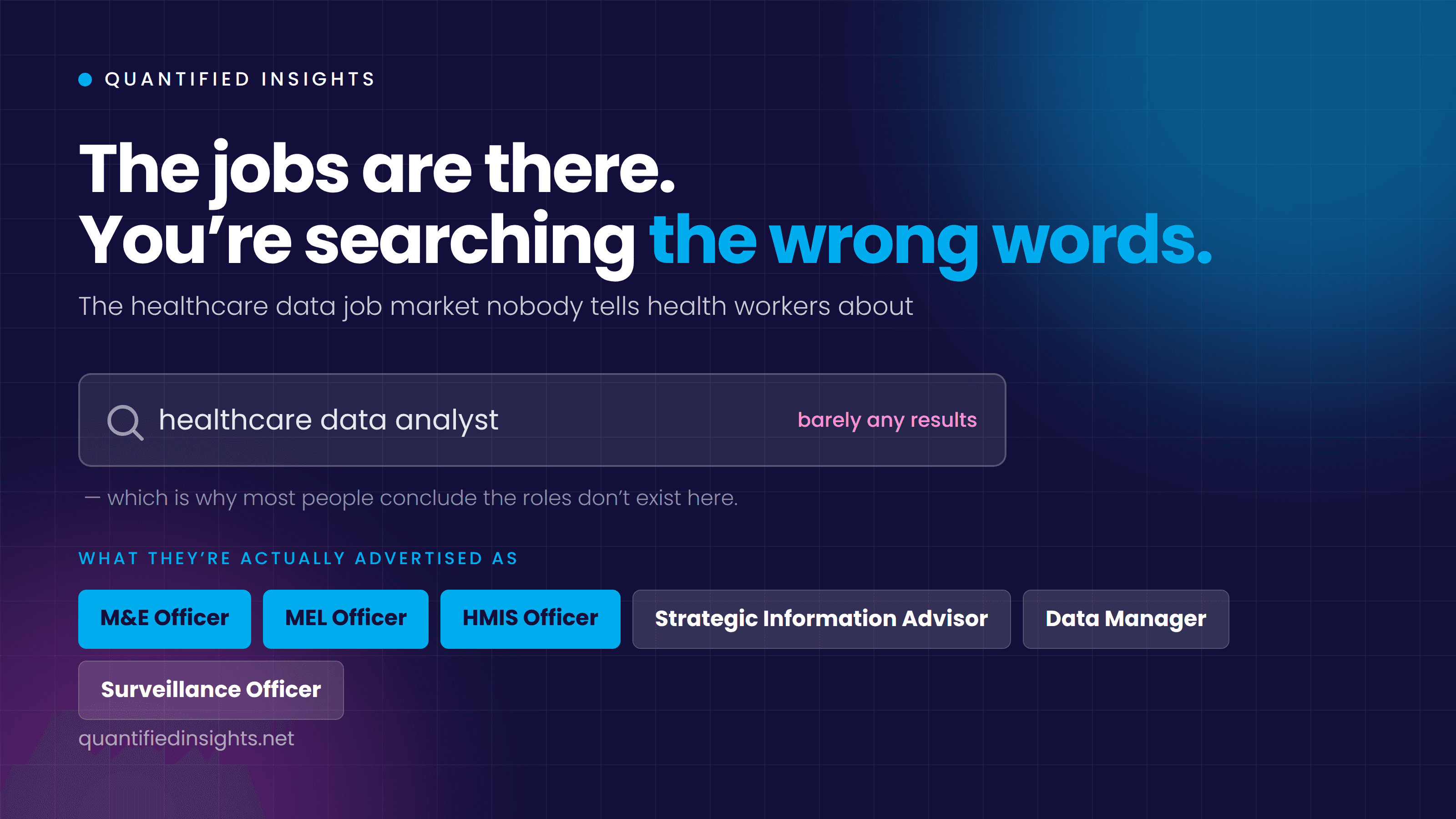
- Understand basic health metrics and HMIS indicators
- Build a simple dashboard for your unit or department
- Connect with other data-minded health professionals
The Nigerian Context
Nigeria's healthcare sector is rapidly digitizing. HMIS, DHIS2, and electronic medical records are becoming standard. The professionals who can bridge the gap between healthcare and data will be the leaders of tomorrow's health system.
Our Healthcare Analytics program is specifically designed for healthcare professionals who want to build practical data capabilities for their organizations.