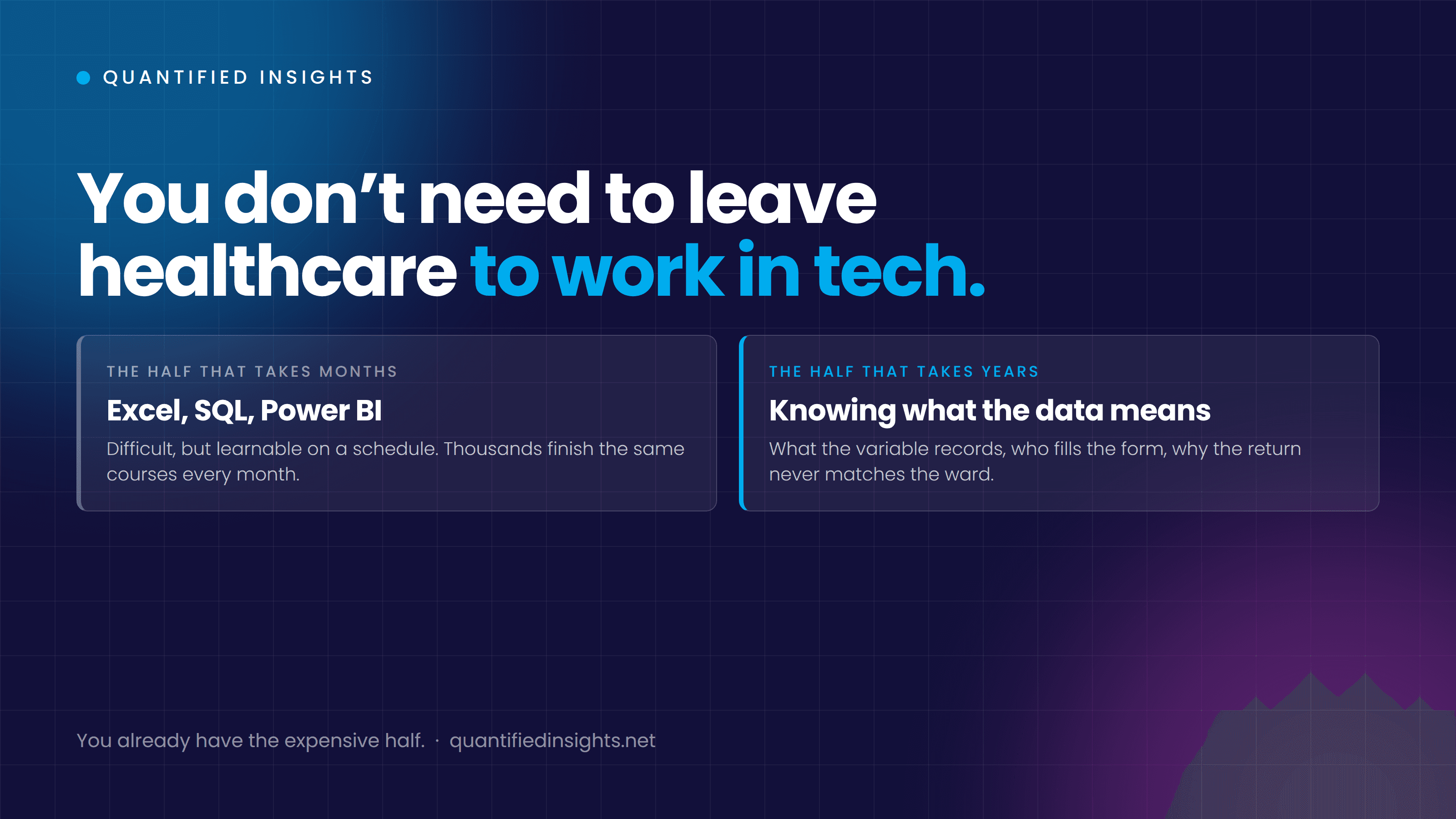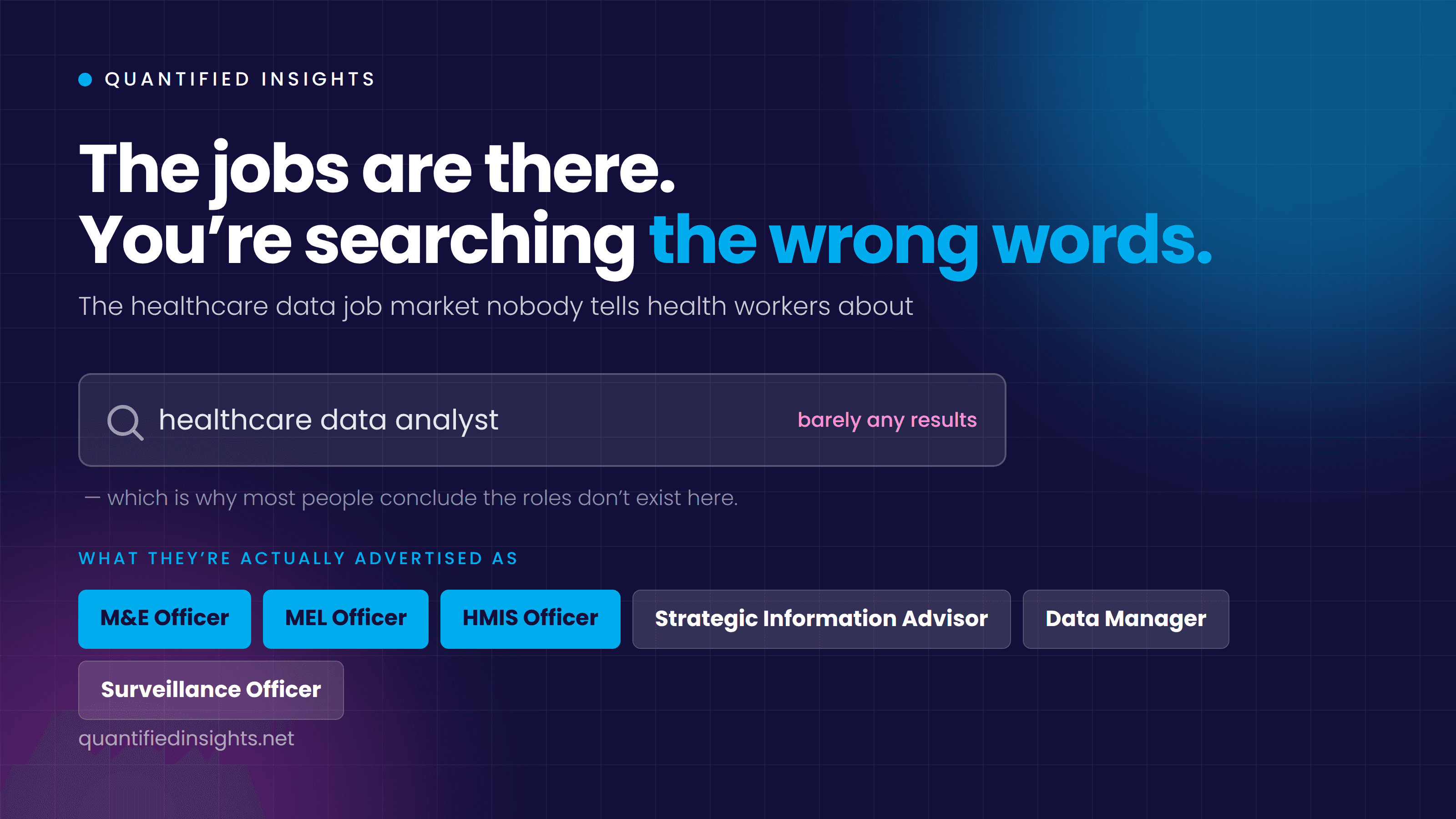
I’ve watched countless people grind away at data analysis boot camps and degree programs, only to find out that the tech job market is overcrowded and volatile, layoffs are happening by the day, and entry-level roles are disappearing faster than they come up.
If you’re a data analyst (or aiming to be one) feeling stuck in this mess, there’s another path most people are not talking about: healthcare. Healthcare is one industry that generates a huge volume of patient data every day, but most of that data sits unused. I made this exact point in a graduate class last year, and my lecturer pushed back. He said, “Healthcare has so much research; doesn’t that prove they’re using data well?” My answer: no. Just because there’s lots of academic research doesn’t mean hospitals and clinics actually use data to run things better.
In healthcare, there are scarce resources and, even at that, a lot of wastage. You know why? Some people don’t do proper needs assessment before buying supplies. They don’t analyze how many syringes they use in, say, the male medical ward over a month to figure out how many to order next time. Instead, they buy based on assumptions. So they either under-buy (and run out) or overbuy (and waste).
And the story is the same for tons of items: gloves, syringes, IV sets, even bandages. Inventory systems often live in spreadsheets or paper notebooks. No one’s running simple analyses like “What’s our average syringe usage per ward each month?” If someone did that, the hospital could save money, reduce stockouts, and keep supplies from expiring on the shelf.
Want to master data cleaning end‑to‑end?
In my new eBook Clean Data, Clear Insights: Mastering Data Cleaning Techniques for Analysts, I take you step‑by‑step through two real-world case studies — complete code, checklists, and best practices you won’t find anywhere else.
Then there’s the problem of long waiting times. Even though there’s plenty of research on why patients wait and how to fix it, most hospitals still do nothing. Patients arrive, sit for hours, and get frustrated. Doctors and nurses are overworked because staffing levels aren’t adjusted based on actual patient flow data. Instead, staffing rotas get set by rough estimates. If data analysts got involved, we could analyze check-in timestamps, triage times, and discharge times to forecast busy windows and then schedule staff accordingly. But right now, that rarely happens.
Most Accident & Emergency (A&E) rooms are short of beds, while some other wards have empty beds that sit unused. It’s that classic mismatch: overcrowded ER, idle beds elsewhere. What can fix that? Simple bed-utilization metrics. Things like average length of stay (ALOS), occupied bed days (OBD), and percentage of occupancy. If a hospital tracked those numbers every day, they could see which wards are under or over capacity. A data analyst could build a dashboard showing, for example, “Ward A is 95% full today, Ward B is only 60% full,” and then managers could move patients around or open up beds in the ER. But because most places still rely on paper logs or monthly Excel exports, that data never drives decisions in real time.
So, if you’re just starting out as a data analyst and want to niche down, healthcare is a better option than tech right now. There are lots of untapped opportunities there. You won’t be just another “data person” in a sea of applicants. You could be the first analyst at a local hospital or small clinic, and your work would immediately translate into cost savings, faster patient flow, and better inventory management.
One of these days, I will embark on a complete end-to-end project in healthcare so we can all learn how this works in the real world. We start start with a simple use case: picking one hospital bed utilization, pulling admission/discharge timestamps, calculating ALOS and occupancy rates, and designing a live dashboard to help managers balance beds across wards. From there, maybe dig into patient wait times in the ER: analyzing check-in times, triage times, and treatment start times, then creating forecasts to help with staffing rotas. You could also do this on your own.
So, if you’re a data analyst feeling stuck in tech, consider looking at healthcare. It might not look as glamorous as working at a big startup, but the data problems are real, the impact is direct, and the opportunities are wide open. Plus, while tech is laying people off by the thousands, hospitals are still hiring — because even in a recession, people need care, and they still need data analysts to help them run more efficiently.
If you want to break into data analysis and feel like you’re competing with everyone else in tech, take a step back and look at healthcare. There’s lots of data, so many inefficiencies, and almost nobody addressing these problems with analytics. You could be the one to change that. Good luck!
Structured Training Options
Our Healthcare Data Analytics Mentorship Program is specifically designed for healthcare professionals. Over 12 weeks, you'll learn Excel, SQL, and Power BI through healthcare-specific projects — with live mentorship and a maximum cohort size of 6.
For a broader data skillset (including Python and AI tools), our Data Analysis with AI Training covers everything from beginner to portfolio-ready.
Interested in bringing data analytics capabilities to your hospital or health organization? Explore our Healthcare Analytics Consulting services.