Healthcare is generating more data than ever before — from electronic medical records and lab results to wearable device readings and insurance claims. Healthcare data analytics is the practice of turning that data into actionable insights that improve patient outcomes, reduce costs, and streamline operations.
Whether you're a healthcare professional looking to upskill or someone considering a career pivot, understanding healthcare data analytics is becoming essential in today's data-driven health systems.
Why Healthcare Needs Data Analytics
The numbers tell the story:
- Hospitals generate approximately 50 petabytes of data per year
- Medical errors remain a leading cause of death — many are preventable with better data
- Healthcare spending in Nigeria is rising, but resource allocation often lacks data-driven decision-making
"Without data, you're just another person with an opinion." — W. Edwards Deming
Healthcare analytics bridges the gap between raw medical data and informed clinical, operational, and strategic decisions.
The Four Types of Healthcare Analytics
| Type | Question It Answers | Example |
|---|---|---|
| Descriptive | "What happened?" | Monthly patient admission trends |
| Diagnostic | "Why did it happen?" | Root cause of rising infection rates |
| Predictive | "What will happen?" | Forecasting bed occupancy for next quarter |
| Prescriptive | "What should we do?" | Optimizing staff schedules to reduce wait times |
Most healthcare organizations in Nigeria are still at the descriptive stage — there's enormous opportunity for professionals who can push toward diagnostic and predictive analytics.
Key Applications
1. Clinical Analytics
- Tracking patient outcomes across treatments
- Identifying high-risk patients for early intervention
- Monitoring medication adherence and side effects
2. Operational Analytics
- Reducing patient wait times through queue analysis
- Optimizing bed management and resource allocation
- Streamlining supply chain for medical consumables
3. Financial Analytics
- Analyzing revenue cycle and billing efficiency
- Identifying cost drivers across departments
- Forecasting budget needs based on patient volume trends
4. Public Health Analytics
- Disease surveillance and outbreak detection
- Vaccination coverage monitoring
- Community health needs assessment
Tools Used in Healthcare Data Analytics
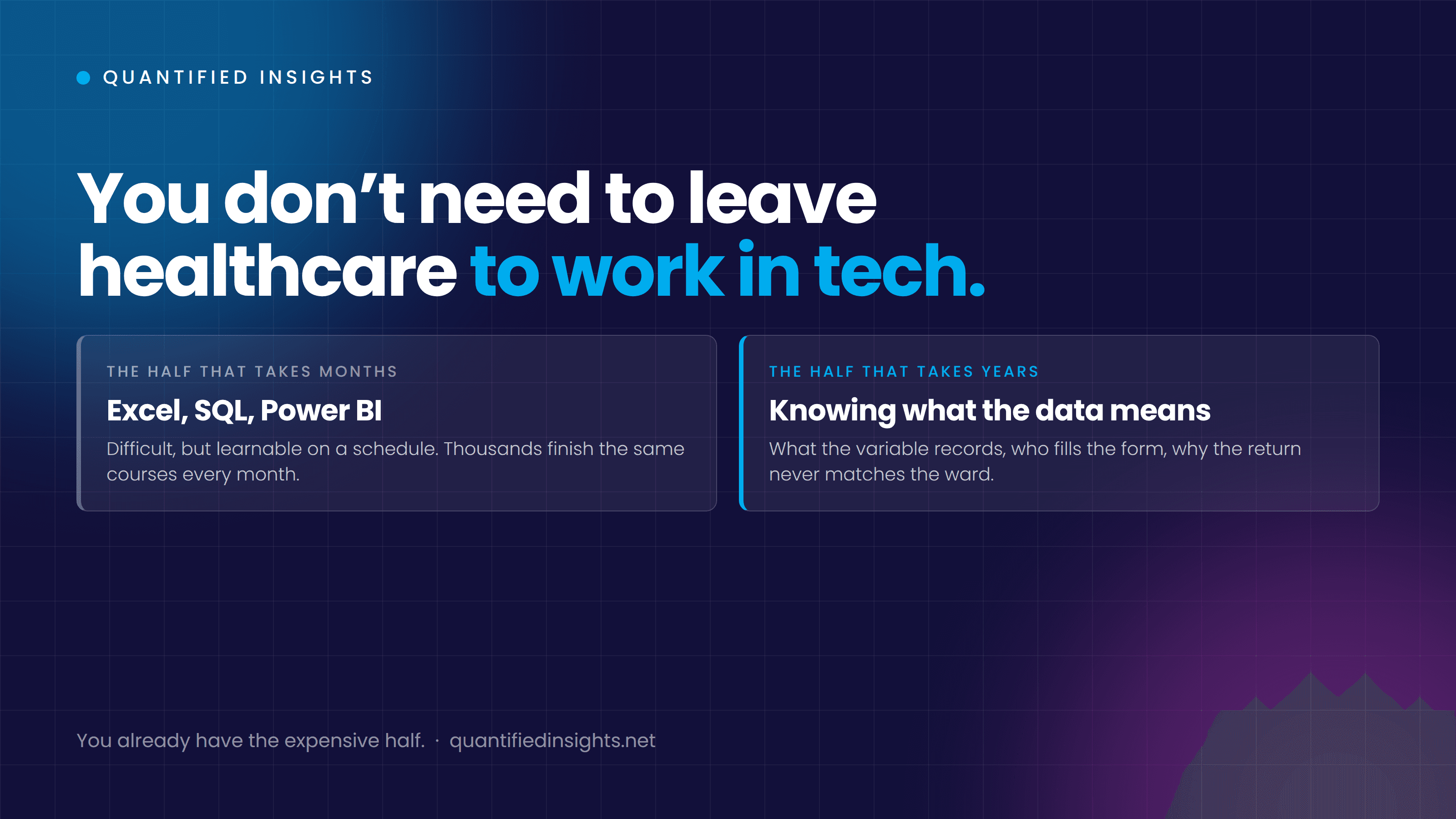
You don't need to be a programmer to work in healthcare analytics. The most common tools are:
- Microsoft Excel — Still the most widely used tool in Nigerian healthcare settings. Essential for data entry, cleaning, and basic analysis.
- SQL — For querying electronic health record (EHR) databases and health management information systems (HMIS).
- Power BI — Microsoft's visualization tool, increasingly adopted by hospitals for dashboards and automated reports.
- SPSS / Stata — Common in academic health research and epidemiological studies.
- Python / R — For advanced statistical analysis, machine learning, and predictive modeling.
Starting out? Focus on Excel, SQL, and Power BI first. These three tools cover 80% of what healthcare analysts do day-to-day.
Career Paths in Healthcare Data Analytics
The field offers diverse career opportunities:
- Health Information Manager — Oversees medical records systems and data governance
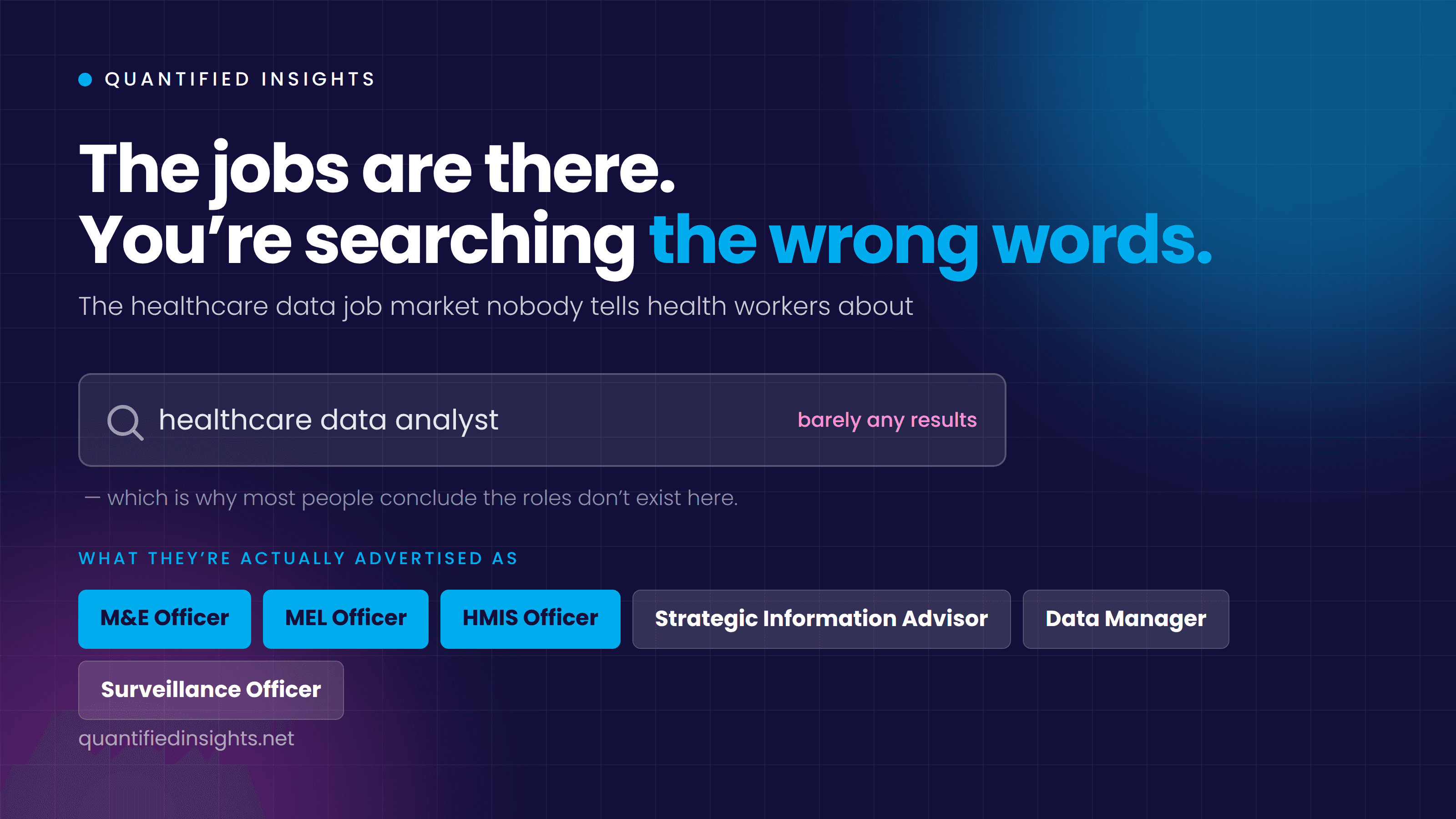
- Healthcare Data Analyst — Analyzes clinical and operational data to support decision-making
- Clinical Research Data Manager — Manages data for clinical trials and health research
- Health Informatics Specialist — Bridges clinical practice and information technology
- Public Health Data Analyst — Works with population-level health data for policy and programs
Salary Expectations
While salaries vary widely, healthcare data professionals in Nigeria can expect:
- Entry-level: NGN 1.5M – NGN 3M annually
- Mid-level (3-5 years): NGN 3M – NGN 6M annually
- Senior / Consulting: NGN 6M+ annually or equivalent project-based rates
Remote opportunities with international organizations can offer significantly higher compensation.
How to Get Started
If you're a healthcare professional — nurse, HIM officer, public health practitioner, lab scientist — you already have the domain knowledge that pure data analysts lack. You just need the technical skills.
Here's a realistic learning path:
- Month 1-2: Master Excel for healthcare data (cleaning, pivot tables, basic charts)
- Month 3: Learn SQL basics (querying HMIS and EHR databases)
- Month 4-5: Build dashboards in Power BI using real healthcare datasets
- Month 6+: Work on a capstone project using data from your own workplace or a public dataset
Structured Training Options
Our Healthcare Data Analytics Mentorship Program is specifically designed for healthcare professionals. Over 12 weeks, you'll learn Excel, SQL, and Power BI through healthcare-specific projects — with live mentorship and a maximum cohort size of 6.
For a broader data skillset (including Python and AI tools), our Data Analysis with AI Training covers everything from beginner to portfolio-ready.
Interested in bringing data analytics capabilities to your hospital or health organization? Explore our Healthcare Analytics Consulting services.